Identify the duty
State whether the instrument is used for local indication, control feedback, alarm switching, custody transfer, sanitary documentation or hazardous-area service.
Service contracts that read like operating manuals, not sales kits. This page explains how calibration support can be framed for pressure, flow, level, temperature, sensors and gas monitoring assets without overstating what a record proves.
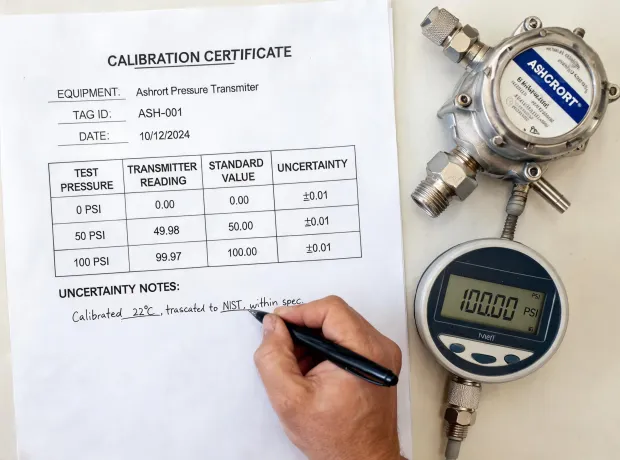
State whether the instrument is used for local indication, control feedback, alarm switching, custody transfer, sanitary documentation or hazardous-area service.
Define tolerance using an accuracy class or ±% value. Avoid broad statements that hide whether the result is a lab capability or a field acceptance rule.
Capture as-found and as-left data, reference equipment, environmental condition and reported uncertainty so a later reviewer can reconstruct the decision.
Use drift history, criticality and accessibility to set the next service interval rather than copying the same date across dissimilar instruments.
A useful calibration record states the reference chain, not merely that an instrument was calibrated. Where accredited service applies, the report can identify ISO/IEC 17025 scope and NIST or national-standard traceability. Where field verification is more appropriate, the document should still separate reference equipment, acceptance tolerance and the observed result.
Ashcroft's service language also distinguishes product approval from calibration traceability. NIST does not certify products, and hazardous-area suitability depends on the equipment marking, zone and installation practice. Keeping those ideas separate helps procurement, quality and maintenance teams make a cleaner decision.
Include instrument type, range, location, current interval, acceptance tolerance and whether accredited calibration is required. Ashcroft can help shape the service scope before a purchase or outage window is scheduled.